

Artists & Designers
American Art Furniture
A History of Experimentation: 1970 - 2000
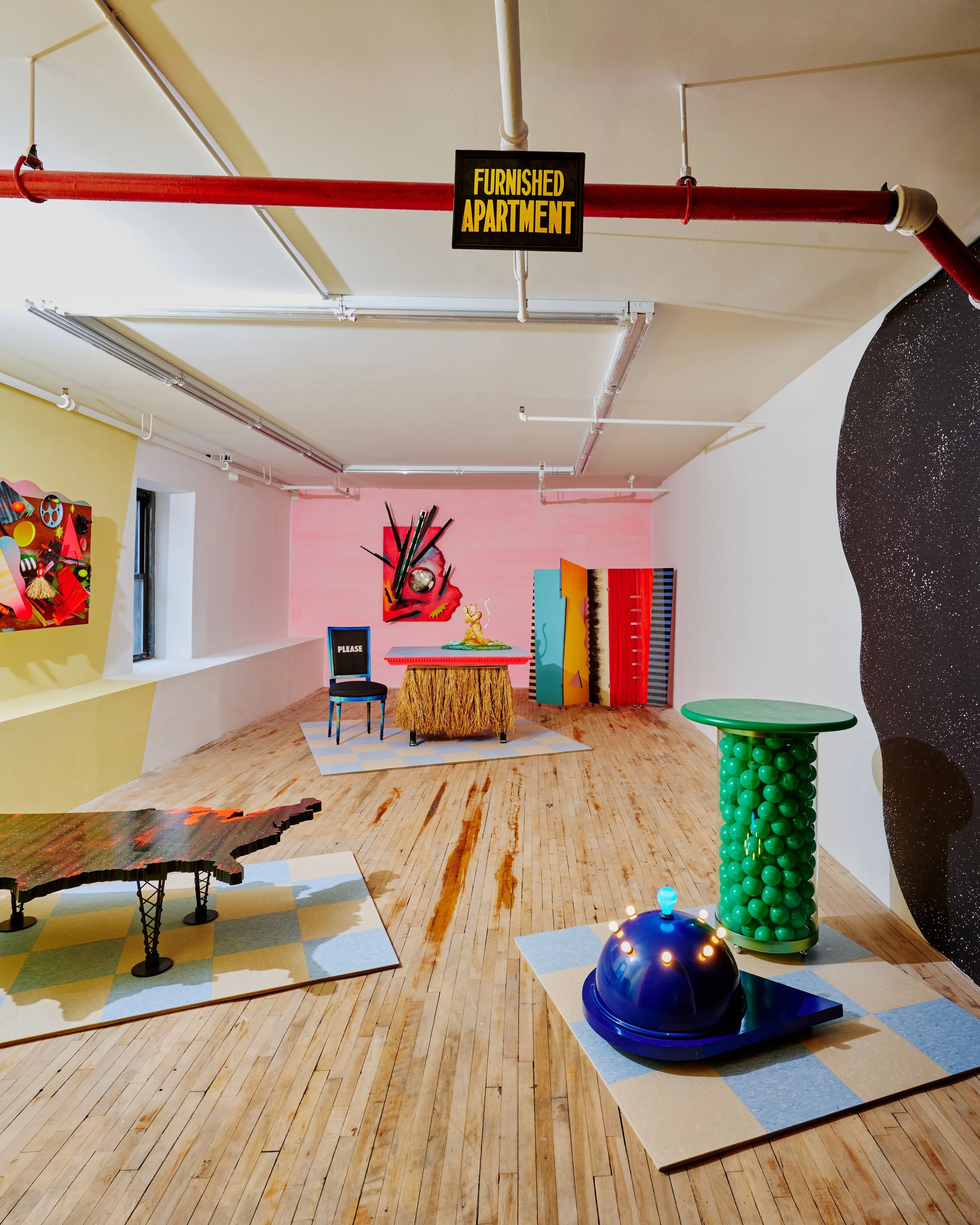
Installation view of Dan Friedman Why Shouldn’t I Have Fun All Day exhibition at Superhouse. All photography by Matthew Gordon unless otherwise credited.
.In 1980, the magazine Fine Woodworking published an article titled “Decoration vs. Desecration,” featuring a desk by a young furniture maker named Wendy Maruyama. The piece was constructed using traditional mortise-and-tenon joinery, but Maruyama had filled the joints with bright purple resin, contrasting sharply with the naturally finished wood. She also emblazoned the writing surface with an enormous letter W, effectively signing the piece in plain sight. The magazine and its readers were appalled. The work was dismissed as adolescent, its maker accused of desecrating the traditions of fine woodworking.
Maruyama was unmoved. In her response, she defended her right to work with wood however she pleased, pointing out that painted furniture and elaborate ornament had centuries of precedent. Why should the conventions of contemporary fine woodworking dictate what she could or couldn't make?
Around the same time, in downtown Manhattan, artists were making furniture that was similarly provocative. At Art et Industrie, a gallery founded by Rick Kaufmann in 1977, chairs twisted into improbable shapes, cabinets borrowed from architecture and sculpture, and familiar household objects took on entirely new personalities. Howard Meister, Terence Main, Elizabeth Browning Jackson, James Hong, Alex Locadia, Gloria Kisch, and others were part of a community that treated furniture as a form of artistic expression, unconstrained by the expectations of conventional design.
Maruyama and her contemporaries in studio furniture were asking many of the same questions, yet their work was largely discussed in different circles. One group came out of woodworking programs and the American studio craft movement; the other was associated with downtown New York's experimental art scene. Their work was exhibited in different galleries, reviewed by different critics, and eventually placed into different histories.
Still other artists, including Dan Friedman, Scott Burton, Michele Oka Doner, Rhonda Zwillinger, and Pippa Garner, approached furniture through sculpture, graphic design, performance, and contemporary art. Their work sometimes overlapped with these movements, but they were more often understood according to the disciplines and artistic communities in which they operated.
These distinctions reflected genuine differences in training, materials, and artistic intentions. But they were also shaped by geography, exhibition opportunities, professional affiliations, and the social circles to which artists belonged. The gallery that exhibited an artist, the school where they trained, or the material they employed could influence how their work was classified and subsequently remembered.
What happens when we look past those divisions?
American Art Furniture offers a way of considering these practices together. It is not a term that every artist discussed here would have used, nor does it describe a single, cohesive movement. Rather, it provides a broader framework for understanding a period in which American artists from different disciplines reconsidered furniture as a medium for personal, political, formal, and conceptual expression.

Alex Locadia Batman Chair, 1989.
Breaking with Tradition
The origins of American Art Furniture lie partly in the postwar studio craft movement, which established furniture making as a field of individual artistic practice.
Wharton Esherick, George Nakashima, Sam Maloof, and Wendell Castle helped expand the possibilities of handmade furniture in the United States. Castle, in particular, brought a sculptor's imagination to furniture, creating carved and laminated forms that departed dramatically from conventional cabinetmaking.
By the 1970s, studio furniture had developed an extraordinary level of technical sophistication. But it had also acquired its own orthodoxies. Wood was generally expected to look like wood. Fine joinery was something to celebrate. Natural finishes, elegant proportions, and the visible demonstration of craftsmanship were regarded as virtues.
For a younger generation, those expectations could be restrictive.
Maruyama's controversial desk was not a rejection of craftsmanship. Its construction demonstrated that she understood traditional woodworking perfectly well. What she rejected was the notion that mastering those techniques obligated her to adopt the aesthetic preferences of the preceding generation.
Tom Loeser arrived at a similar position. Trained within the studio furniture tradition, he became interested in what a chair or cabinet might communicate beyond its function. His early works incorporated painted surfaces, geometric patterns, and unconventional structures, drawing inspiration from sources that included Italian radical design.
In 1983, Loeser met Maruyama at the Appalachian Center for Crafts, where she had invited him for a residency. She encouraged him to approach painting more freely, helping establish a creative relationship that has continued for more than four decades.
Their work offered a different understanding of craftsmanship. Technical knowledge remained essential, but it was put in service of personal expression rather than established notions of taste. Color, ornament, humor, and even awkwardness became legitimate aspects of furniture making.
The same independence characterized Garry Knox Bennett, whose work combined considerable technical ability with an irreverent attitude toward materials and convention.
These makers were working within the studio craft world, but they were hardly conservative in their ambitions. Their furniture could be as visually disruptive, conceptually inventive, and formally adventurous as anything being shown in contemporary art galleries.
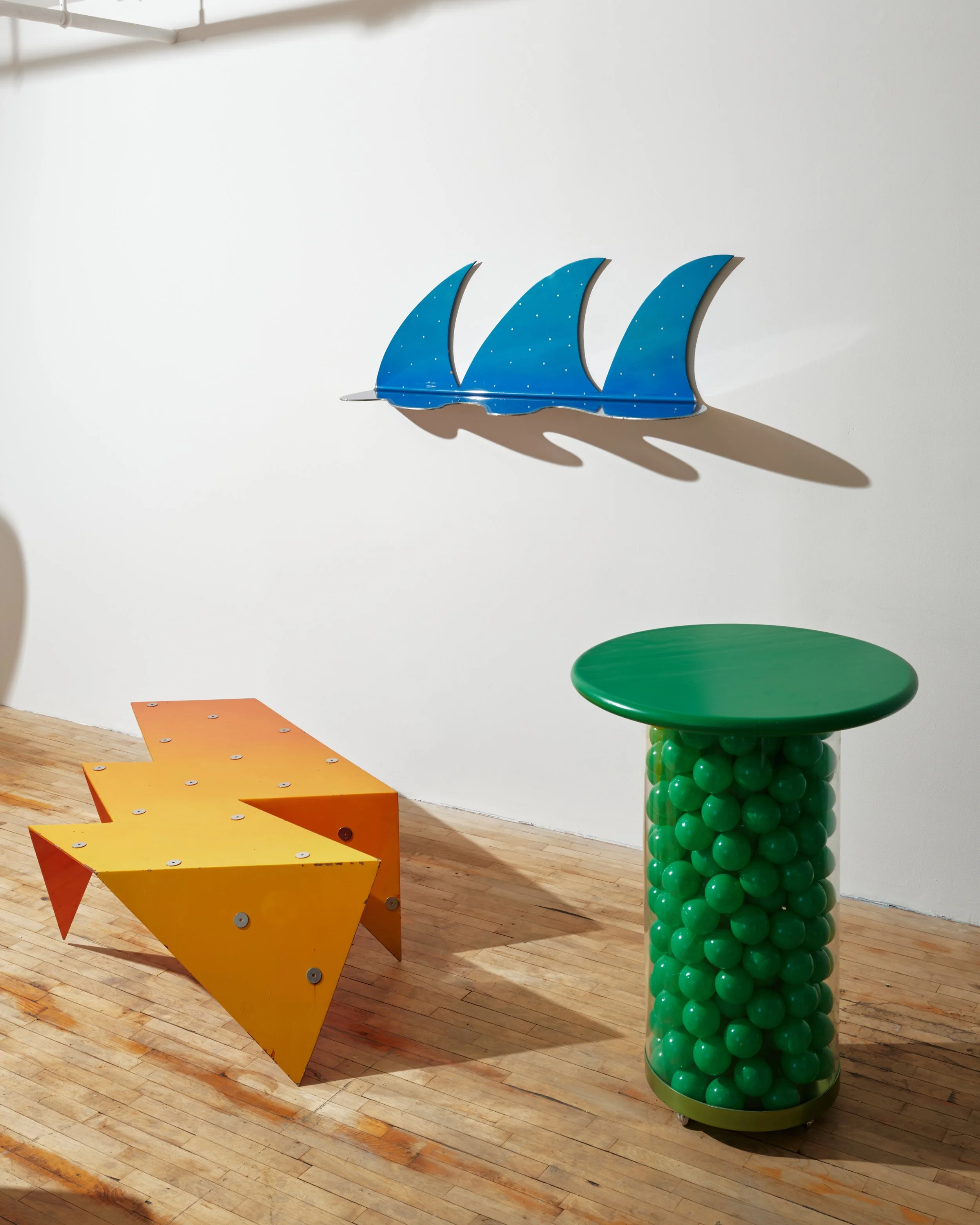
Installation view of Pattern Recognition with works by Elizabeth Browning Jackson and Dan Friedman

Wendy Maruyama Bedside Box (Box on Stand II), 1991

Dan Friedman Strategic Orbital Simulator, 1989
Art et Industrie and Downtown Design Art
In New York, a parallel transformation was taking place.
Art et Industrie opened in 1977, initially presenting radical design from Europe, particularly Italy. Kaufmann and his partner Tracy Rust soon recognized that American artists were producing work of comparable invention, although much of it existed outside the established furniture market.
The gallery became an important meeting point for artists from different disciplines. Some were trained as furniture makers; others were sculptors, architects, textile designers, or graphic artists. Their work shared an interest in transforming recognizable domestic forms, but there was no single style.
Howard Meister, a fourth-generation furniture maker, produced chairs that seemed to have developed personalities of their own. In works such as Johnny's Girl (1981) and P. Strut (1982), familiar components of seating were manipulated into exaggerated, sometimes menacing configurations. These were chairs, but they were also character studies, jokes, and sculptural propositions.
Terence Main and Laura Johnson Drake, working under the name Main & Main, approached historical furniture with a similarly irreverent attitude. Their MondriAnne (1981) turned the recognizable vocabulary of the Queen Anne chair into a colorful postmodern construction. Main would subsequently develop an increasingly biomorphic vocabulary, producing objects whose forms suggested vegetation, anatomy, and natural growth.
James Hong brought an architectural perspective to his furniture, incorporating unusual structural arrangements, shifting planes, and visual illusions.
Elizabeth Browning Jackson approached furniture through textiles and sculpture. Her Re/Fold Chair (designed 1979) transformed a sheet of aluminum into an expressive seating form, while later works explored the sculptural possibilities of foam, upholstery, and synthetic finishes.
Art et Industrie also exhibited sculptors including Forrest Myers and Gloria Kisch, further complicating the distinction between artists who made furniture and furniture makers whose work could be understood as sculpture.
The gallery's importance extended beyond the individual artists it presented. It created an environment in which disparate practices could be considered together, and furniture could be exhibited, discussed, and collected as art.
The terms functional art and Design Art helped distinguish this work from conventional furniture design. But those terms also came to define a particular group of artists associated with the gallery and the downtown scene.
Meanwhile, similarly radical work was being produced elsewhere in the country under the designation studio furniture.
The two histories developed alongside one another, with surprisingly little sustained dialogue between them.

Aspen Golann
Crewel Cabinet, 2026
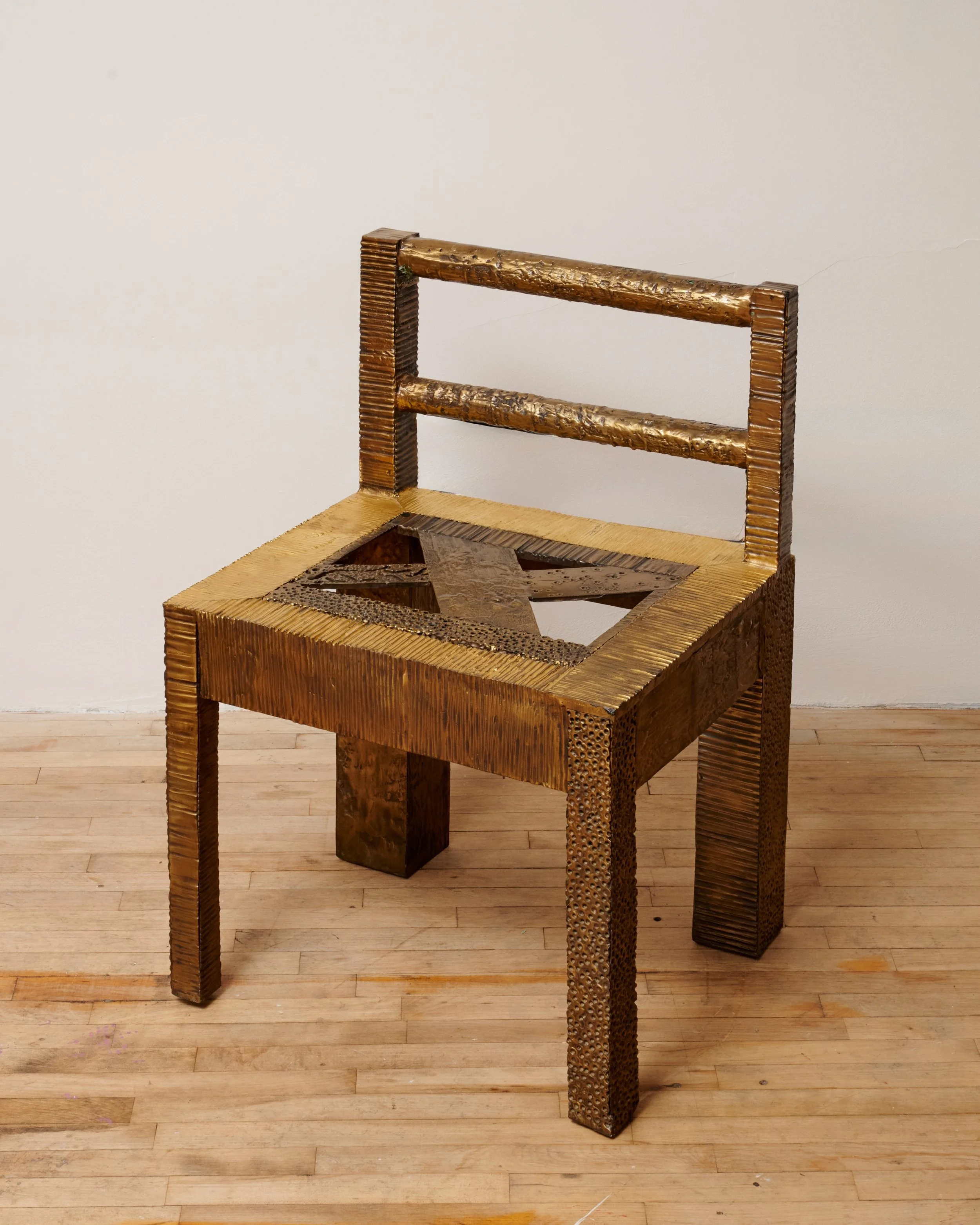
Michele Oka Doner Culmination, 1990

Wendy Maruyama Mickey Mackintosh, 1981

Installation view of Return to Downtown at Superhouse
Beyond the Furniture World
Some of the period's most interesting experiments with furniture came from artists who were not principally identified as furniture makers.
Dan Friedman was already an influential graphic designer when he began making three-dimensional objects in the late 1970s. His immersion in downtown New York's art, fashion, and music scenes profoundly changed his work. Against the restraint of corporate modernism, Friedman embraced color, kitsch, popular imagery, found materials, and the visual disorder of the city around him.
His apartment overlooking Washington Square Park became the center of this experimentation. He painted walls, ceilings, and appliances, filling the space with furniture, sculpture, and objects that he continually rearranged. It was simultaneously a home and an environment in which everyday life became inseparable from artistic production.
Works such as Basic Screen (1981), Wicky Wacky Table (1981), and Please Chair (1982) subjected familiar domestic forms to highly personal treatment. His screens, which he described as movable walls, allowed him to continually reorganize his environment.
Unlike the studio furniture makers, Friedman did not feel obligated to demonstrate fine joinery or fidelity to a particular material. His furniture was part of a larger effort to make design more expressive, culturally engaged, and responsive to contemporary life, a philosophy he articulated in his 1994 book Radical Modernism.
Pippa Garner approached the domestic object from another direction. Working across drawing, photography, performance, sculpture, and consumer-product modification, Garner treated the manufactured world as something to be taken apart and reimagined. Her inventions and transformations exposed the absurdities of consumer culture, using humor to question accepted ideas about usefulness, desirability, identity, and progress.
Rhonda Zwillinger likewise resisted easy classification. Her elaborately embellished objects and installations drew upon domestic decoration, popular taste, and consumer culture, challenging distinctions between sculpture, craft, and ornament.
Scott Burton emerged from performance and conceptual art. In his early performances, furniture stood in for the human figure, with chairs and other objects arranged to suggest relationships and social behavior. He subsequently developed sculptures that could also function as furniture.
His Pair of Rock Chairs (1980–81) consists of two large stones precisely cut to provide seating. Viewed from behind, they resemble natural boulders. From the front, they become an invitation to sit. Burton was interested in what happened when a person used a sculpture, transforming the relationship between artwork and viewer into one of physical participation. His public commissions extended these ideas into parks, plazas, and other shared environments.
Michele Oka Doner brought another perspective to furniture through her investigations of the natural world. Trained in ceramics, she developed an expansive practice encompassing sculpture, drawing, jewelry, public art, and functional objects. Her furniture draws upon organic structures, transforming forms associated with plants, marine life, and the body into objects that occupy an ambiguous position between sculpture and utility.
Her participation in Art et Industrie during the late 1980s connected her to the downtown Design Art scene, while her wider career belonged to a much broader sculptural tradition.
These artists were generally discussed within the context of contemporary art, rather than the history of studio furniture. Yet their work shared important concerns with artists operating in both fields: the transformation of familiar things, the expressive possibilities of ordinary materials, and a willingness to challenge established expectations about what furniture could be.
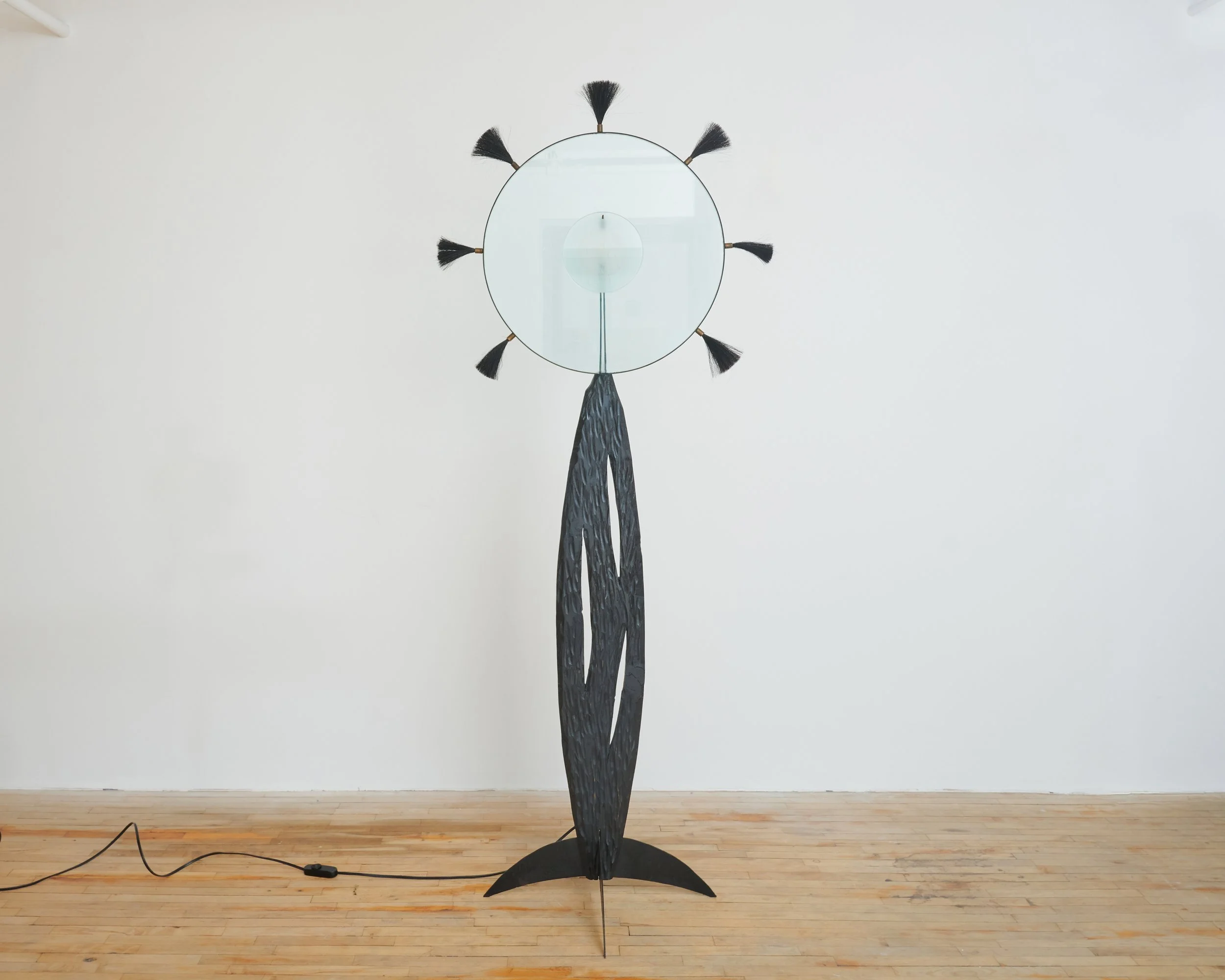
Alex Locadia Shaman, 1989
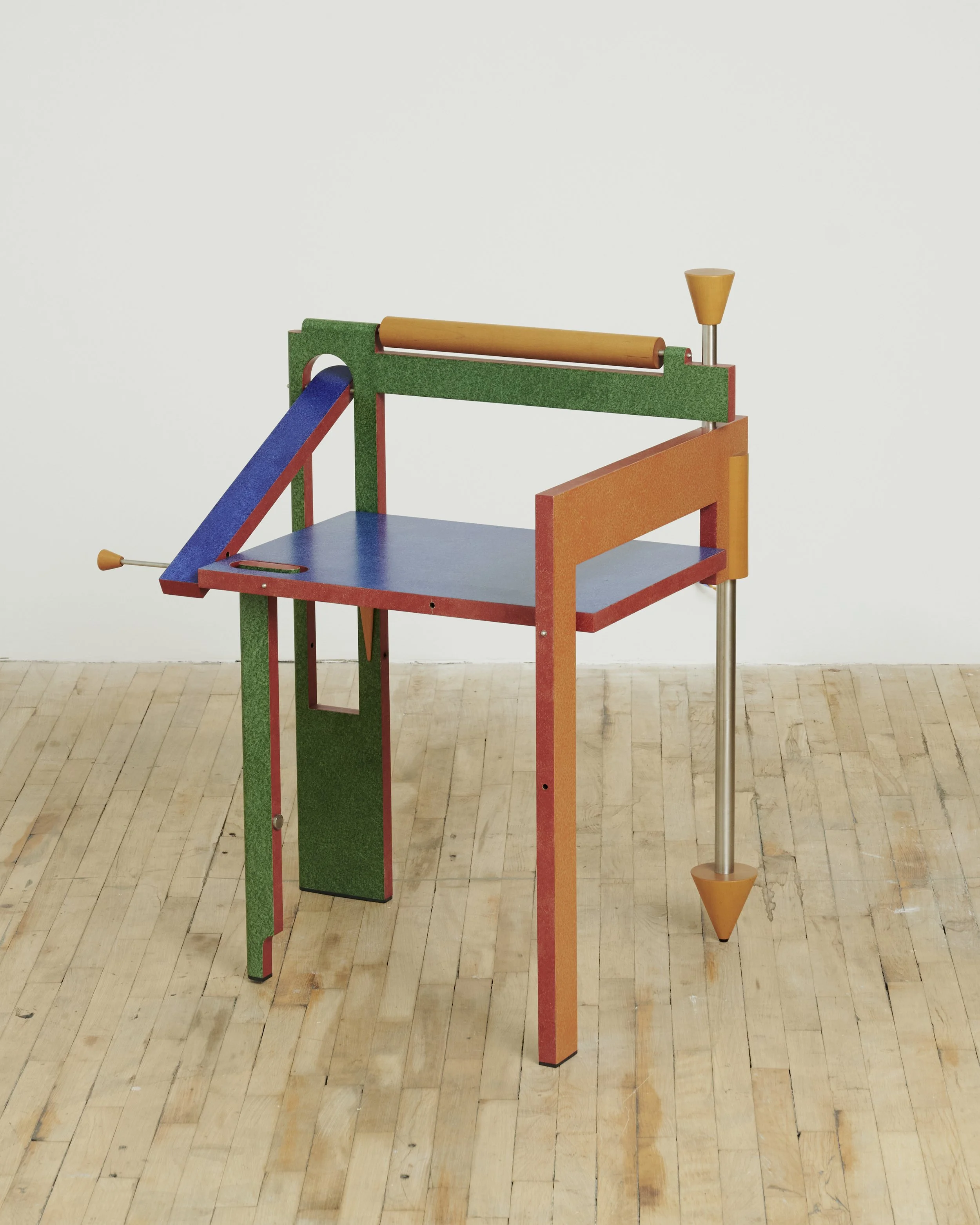
Tom Loeser Foldering Chair, 1989
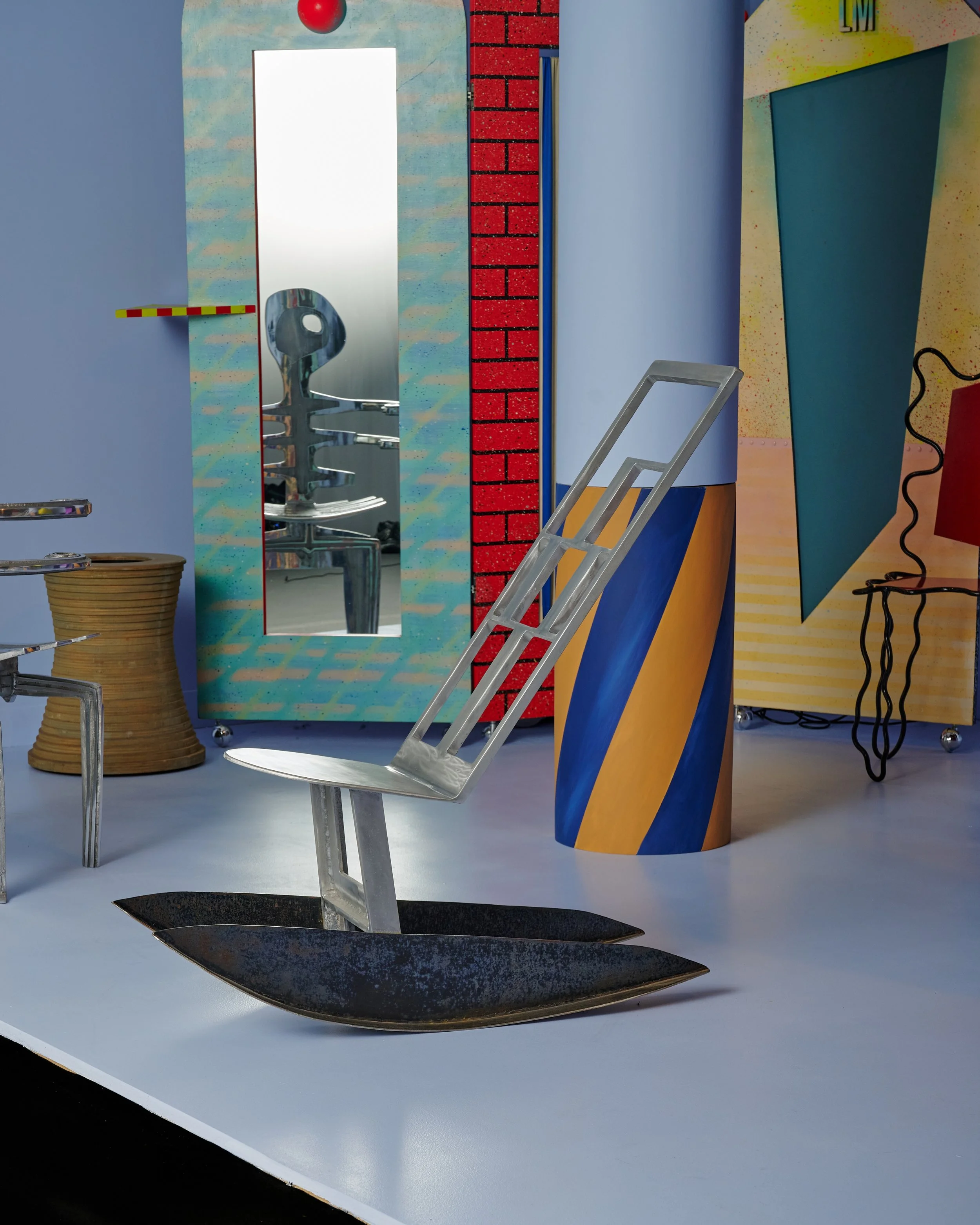
Design Miami 2025 American Art Furniture: 1980-1990
Reconsidering American Art Furniture
Looking across these practices, the divisions become increasingly difficult to maintain.
Meister was trained as a furniture maker, but his work was presented in the context of downtown Design Art. Maruyama and Loeser were equally willing to transform familiar furniture forms, yet remained associated with studio craft. Friedman moved between graphic design, contemporary art, and furniture, while Oka Doner and Burton approached functional objects through sculpture.
The objects sometimes have more in common with one another than the categories assigned to their makers would suggest.
In his essay accompanying Superhouse's 2024 exhibition The Odd Couple: American Art Furniture 1980–Now, curator and historian Glenn Adamson examined this divide, questioning why artists associated with Art et Industrie have rarely been considered alongside studio furniture makers, and why some of the most adventurous studio furniture makers have been largely excluded from histories of radical design.
The separation was partly a matter of professional context. Studio furniture had its own schools, galleries, publications, and collecting institutions. Downtown Design Art developed through another network of artists, dealers, critics, and collectors. Contemporary art provided still another framework through which objects could be understood.
Making methods also played a role. Studio furniture generally placed greater emphasis on the artist's own hand in production, while some artists in the downtown scene worked with fabricators. Yet this was never an absolute distinction.
These categories were useful within their respective communities, but they also contributed to the fragmentation of a history.
Since its founding in New York in 2021, Superhouse has made the exhibition and study of historical American Art Furniture an important part of its program. Rather than approaching studio furniture, downtown Design Art, and contemporary sculpture as separate subjects, the gallery has presented them together, allowing connections that were not always evident in their original contexts to emerge.
Return to Downtown (2022), organized with Magen H Gallery, revisited the experimental culture of Art et Industrie. Blurring the Timeline (2023) placed historical objects from the 1980s and early 1990s alongside contemporary work. The Odd Couple (2024) brought studio furniture and Design Art into direct conversation, accompanied by an essay by Glenn Adamson. Colorama (2024–25) reunited Wendy Maruyama and Tom Loeser, demonstrating how the radical experiments of their early careers continued to inform their practices decades later. The gallery subsequently presented Why Shouldn't I Have Fun All Day? (2025), the first solo gallery exhibition devoted to Dan Friedman in thirty years.
This research culminated in Superhouse's presentation American Art Furniture: 1980–1990 at Design Miami in December 2025. Bringing together historical works by thirteen artists associated with studio furniture, downtown Design Art, and contemporary sculpture, the exhibition offered a concentrated examination of the period without privileging any single movement or artistic community. Works by figures including Dan Friedman, Howard Meister, Terence Main, Michele Oka Doner, Tom Loeser, Wendy Maruyama, and Elizabeth Browning Jackson appeared together, illustrating the breadth of approaches to furniture that emerged during the decade. Presented within the context of an international collectible-design fair, the exhibition proposed a more inclusive understanding of American Art Furniture, emphasizing connections that have often been overlooked in conventional histories of art and design.
These exhibitions are part of an ongoing effort to reconsider the history of American Art Furniture, particularly the relationships among artists whose work has been separated by medium, discipline, geography, or affiliation.
The aim is not to impose a new category upon artists who may have resisted categorization in the first place. It is to recognize the common interests that connected their practices and to give a fuller account of the experimentation taking place during this period.

Michele Oka Doner
Culmination, 1990
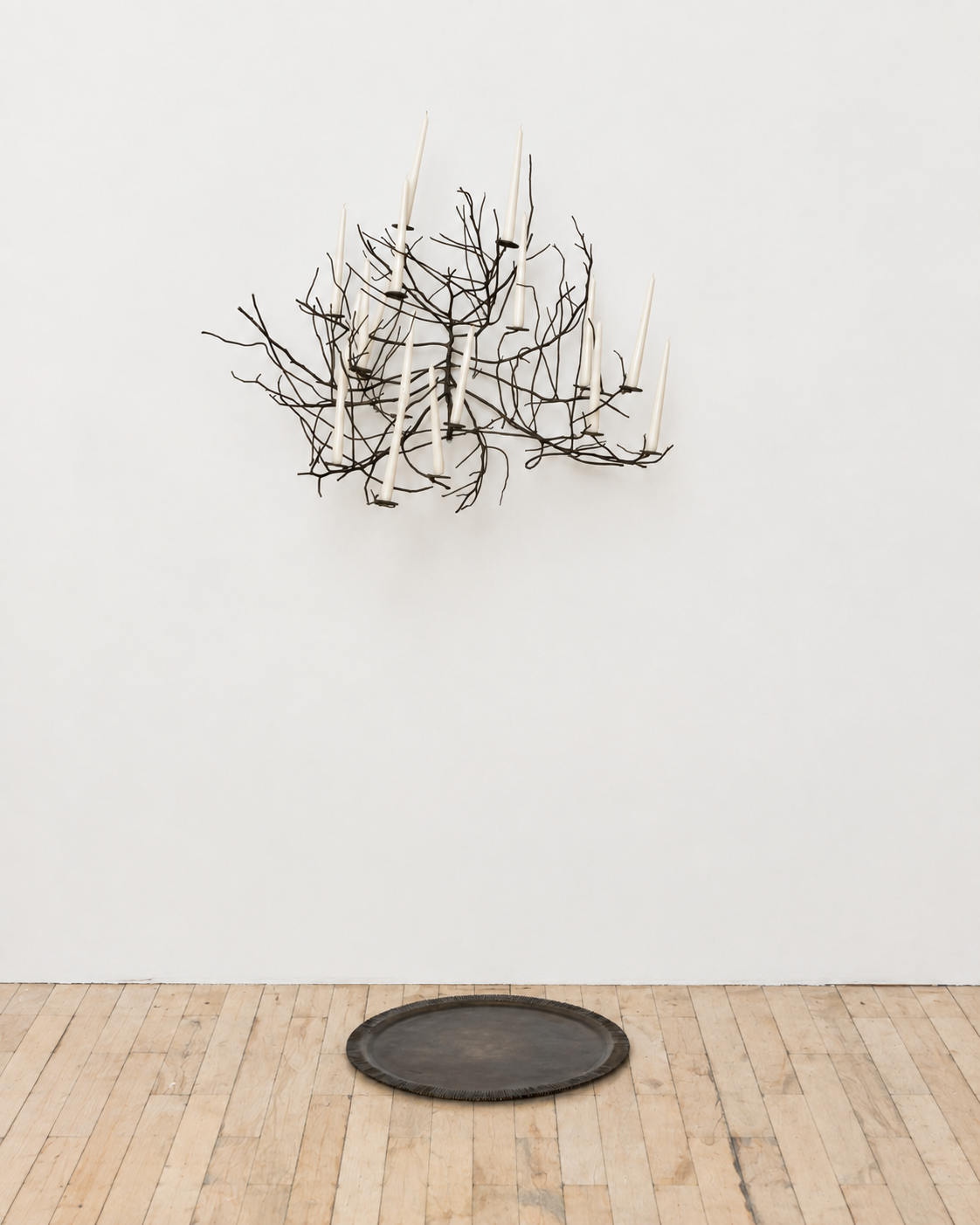
Culmination detail

Aspen Golann
Crewel Cabinet, 2026
Recent Press
Artnet She Was a Design Visionary Who Vanished for Decades—Then Her Phone Rang
Cultured 6 Booths You Shouldn’t Miss at the 20th Anniversary Edition of Design Miami
Family Style Work in Progress
Galerie Where to See Stellar Collectible Design in New York During Salon Art + Design
Apartamento Seismic Visions story on Dan Friedman
The Grand Tourist A Gallery Remembers a Daring Postmodern Talent
The New York Times Style Magazine The Artist Dan Friedman’s Fantastical Furniture, on View in New York
The New York Times Rick Kaufmann, Impresario of Art Furniture
Wallpaper A friendly rivalry coloured by kinship: Wendy Maruyama and Tom Loeser on their two-artist show
Curbed Superhouse Exhibits Furniture from Art et Industrie