
Exhibitions
Shared Ground
Lewis Prosser & Sarita Westrup
January 8 - February 21, 2025
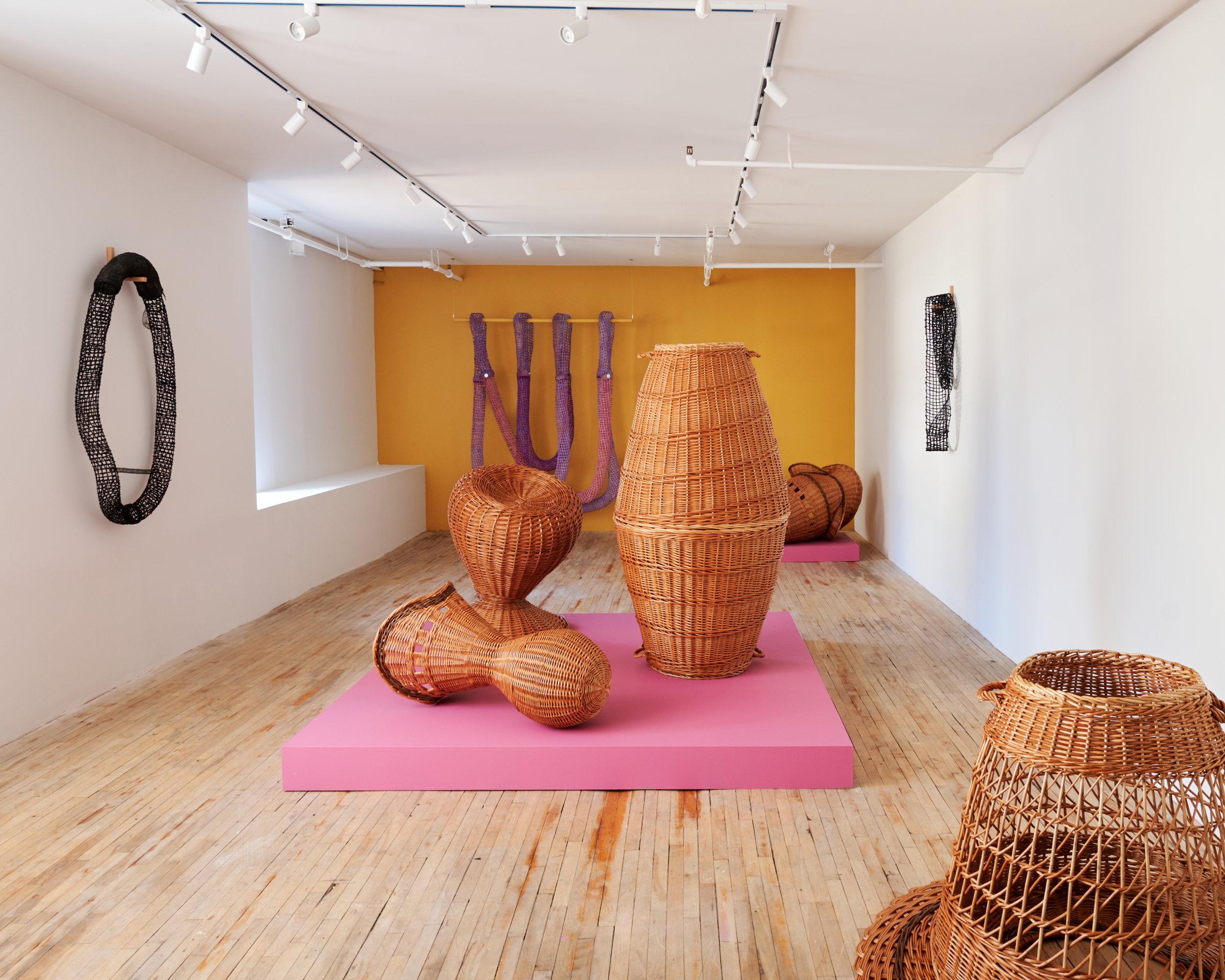
Installation view (All photography: Matthew Gordon)
Superhouse is pleased to present Shared Ground, a two-artist exhibition bringing together the sculptural basketry of Sarita Westrup and Lewis Prosser—two artists who transform inherited craft traditions into living acts of storytelling, ritual, and repair. On view from January 8 through February 21, 2026, Shared Ground stages a transatlantic conversation between South Texas and South Wales, tracing how each artist weaves identity and environment into their material practices.
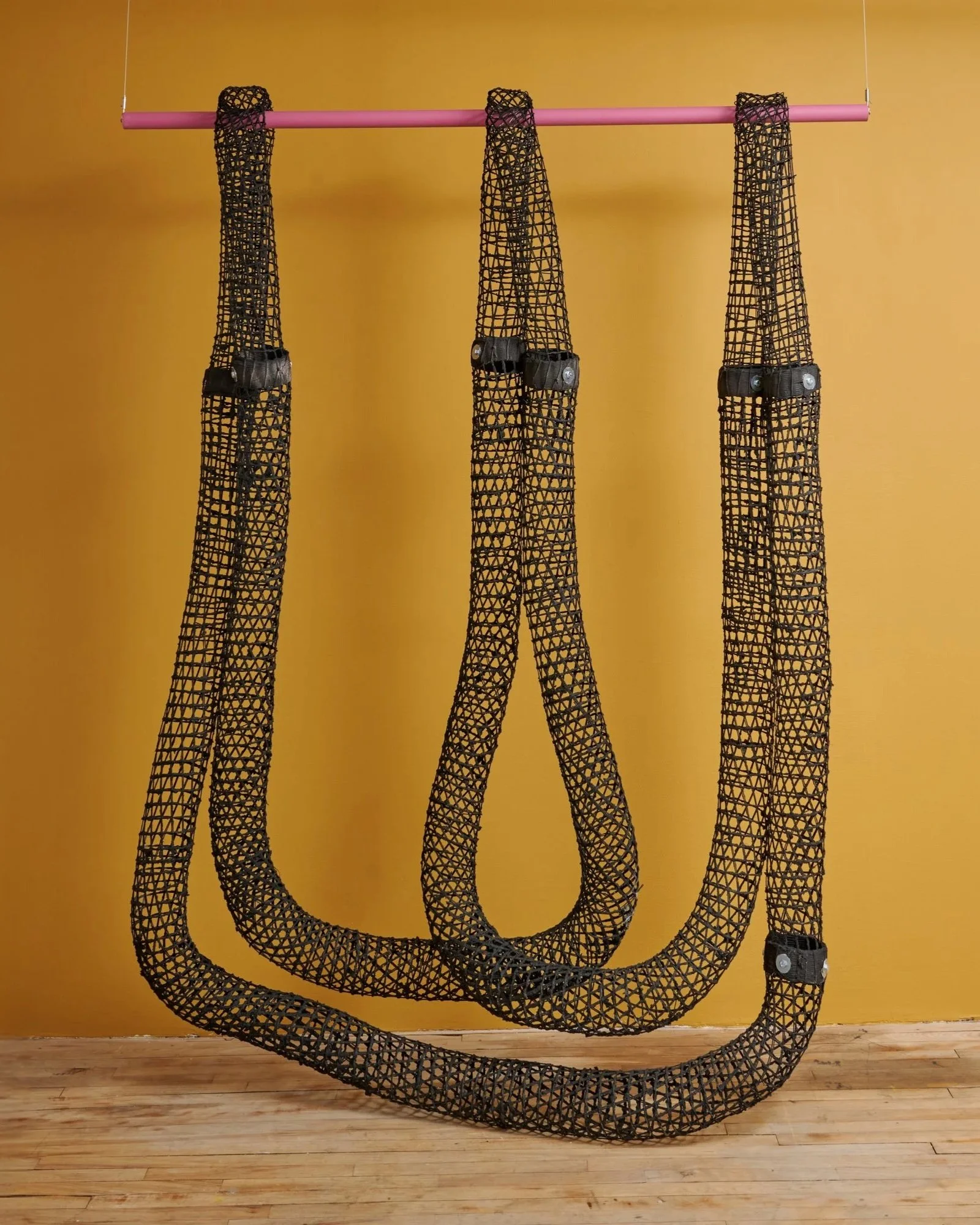
Sarita Westrup Nonlinear Route IV, 2025
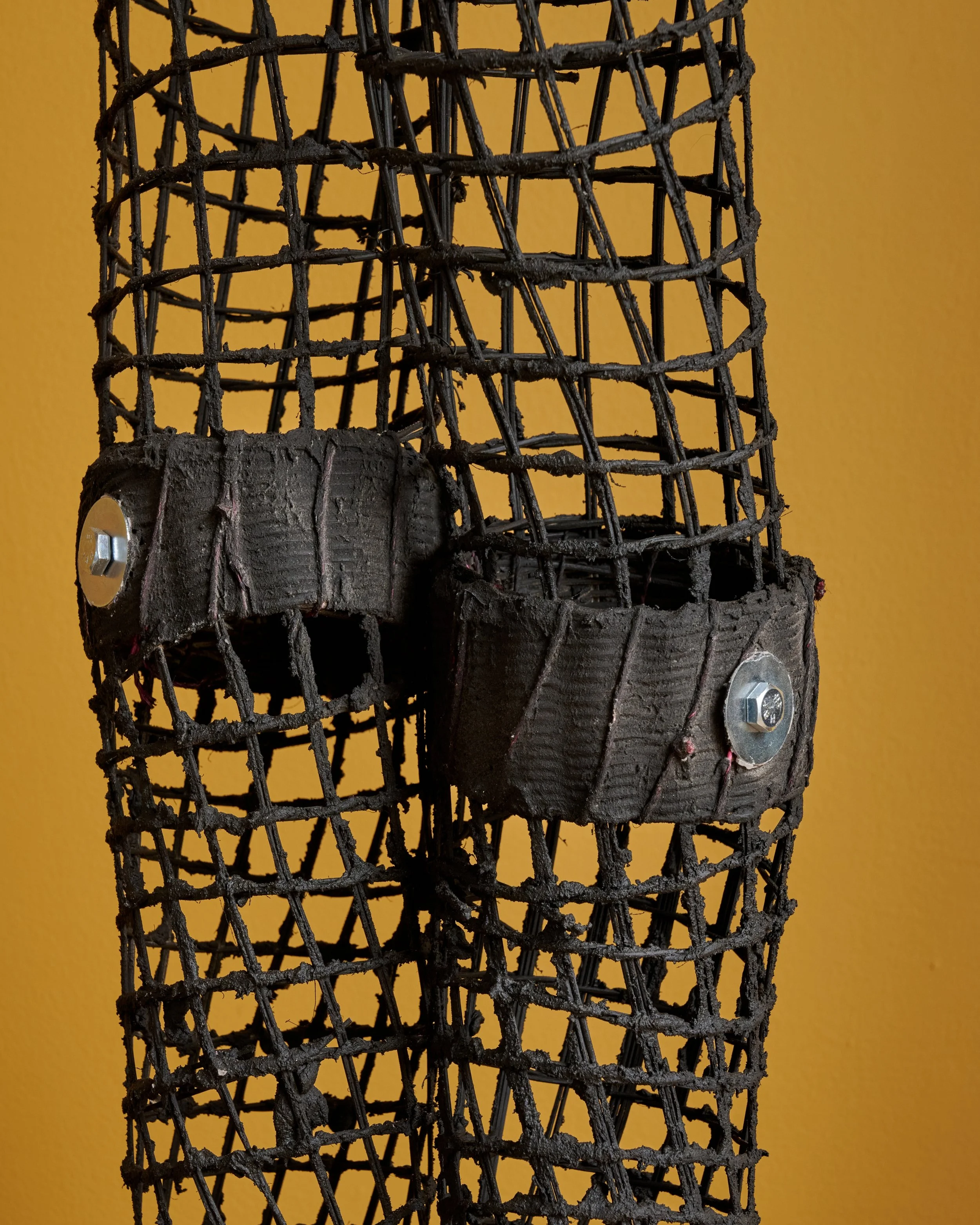
Detail Nonlinear Route IV, 2025
Though separated by geography, Westrup from the borderlands of South Texas, Prosser from the landscapes of Wales and the Westcountry, both artists work at the intersection of basketry and storytelling, using their hands to tangle together histories both personal and collective. For each, the basket is a conduit for memory, place, and possibility.
Westrup’s sculptural baskets and free-flowing hanging forms translate her Mexican-American identity and the material languages of the Rio Grande Valley into tactile meditations on border, belonging, and transformation. Working through traditional basketry and dyeing techniques, she employs cochineal-dyed reeds, woven membranes, and bound sculptural structures to explore permeability and protection. Her practice bridges inherited craft traditions with experimental processes, binding natural and synthetic materials to evoke the fluid boundaries between land, body, and culture. In her hands, weaving becomes an act of empathy and reclamation, a way of mapping belonging across shifting terrain.
Prosser approaches basketry as both sculptural language and performative event, drawing on the craft techniques and cultural traditions of the British Isles to animate the social life of objects. His practice blends meticulous craftsmanship with playful improvisation and embodied performance, celebrating ideas of ritual, heritage, and humour while inviting moments of joyful disruption. Treating weaving as a vehicle for connection and exchange, his speculative forms link region, community, and custom—balancing levity with sincerity.
In dialogue, their practices reveal weaving as a living knowledge system, rooted yet restless, ceremonial yet unconventional. Shared Ground explores how tradition, when re-embodied through contemporary art, becomes a tool for empathy and reinvention, a way to build connection across borders, disciplines, and time.
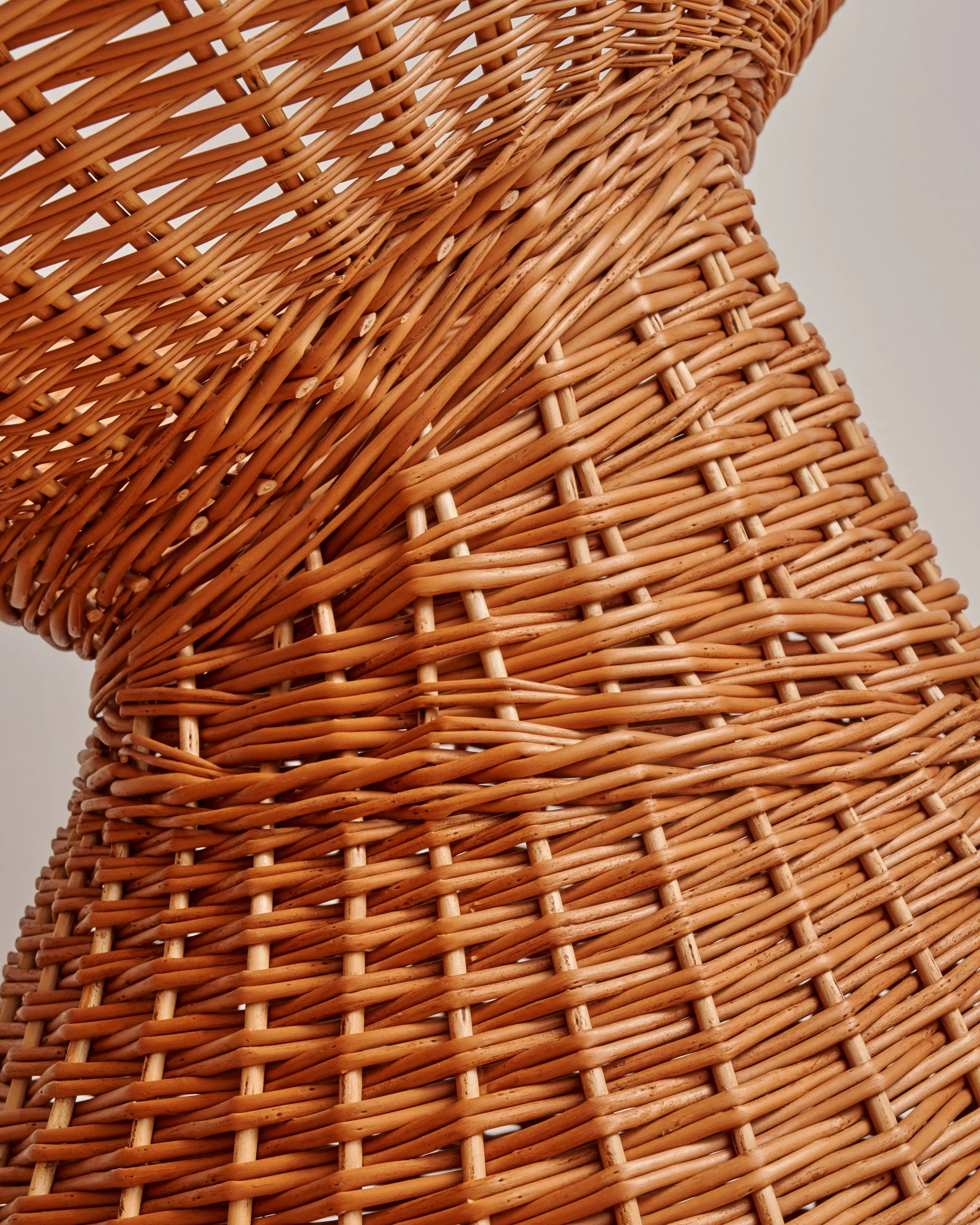
Detail Esquat Knoll, 2025
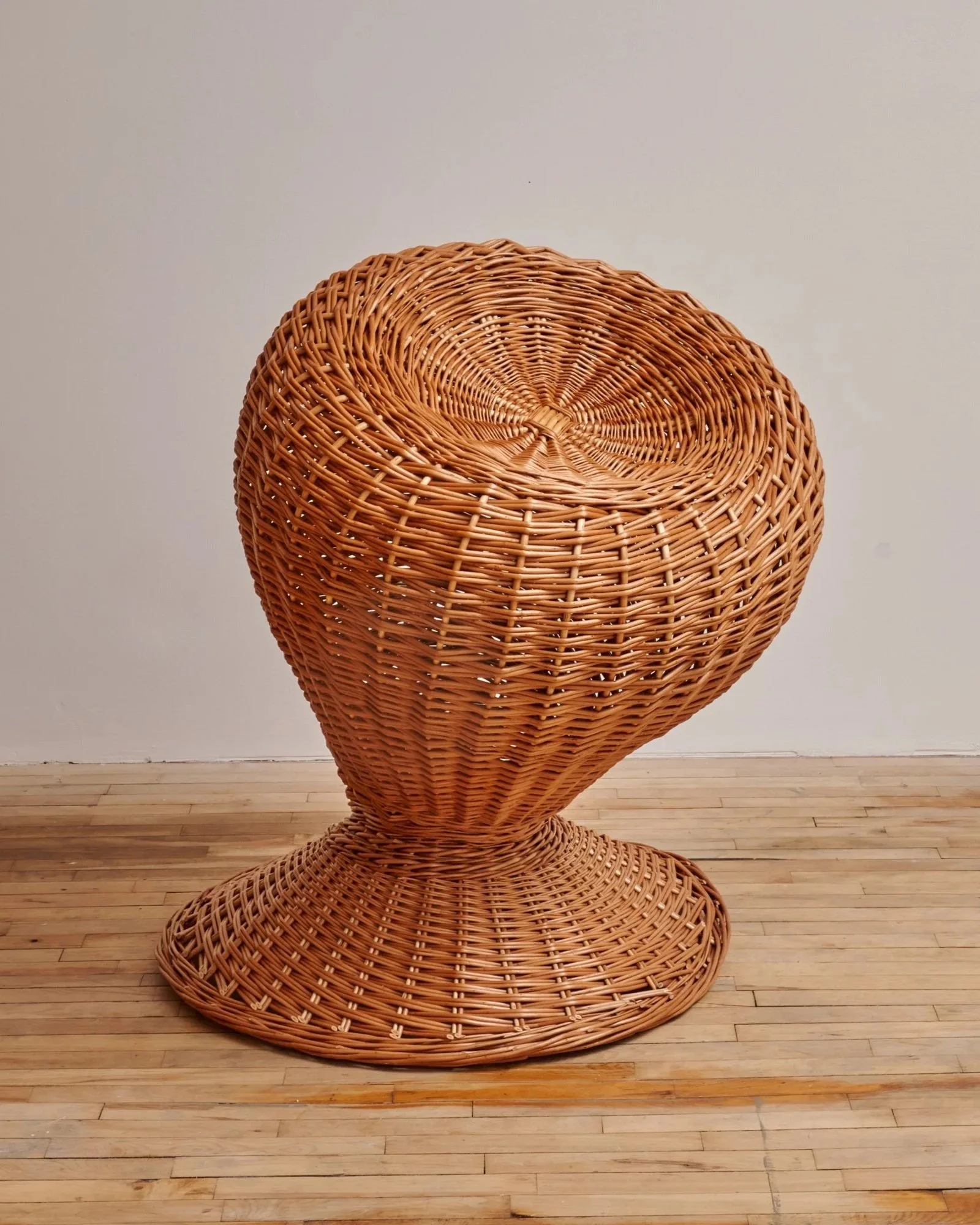
Lewis Prosser Esquat Knoll, 2025
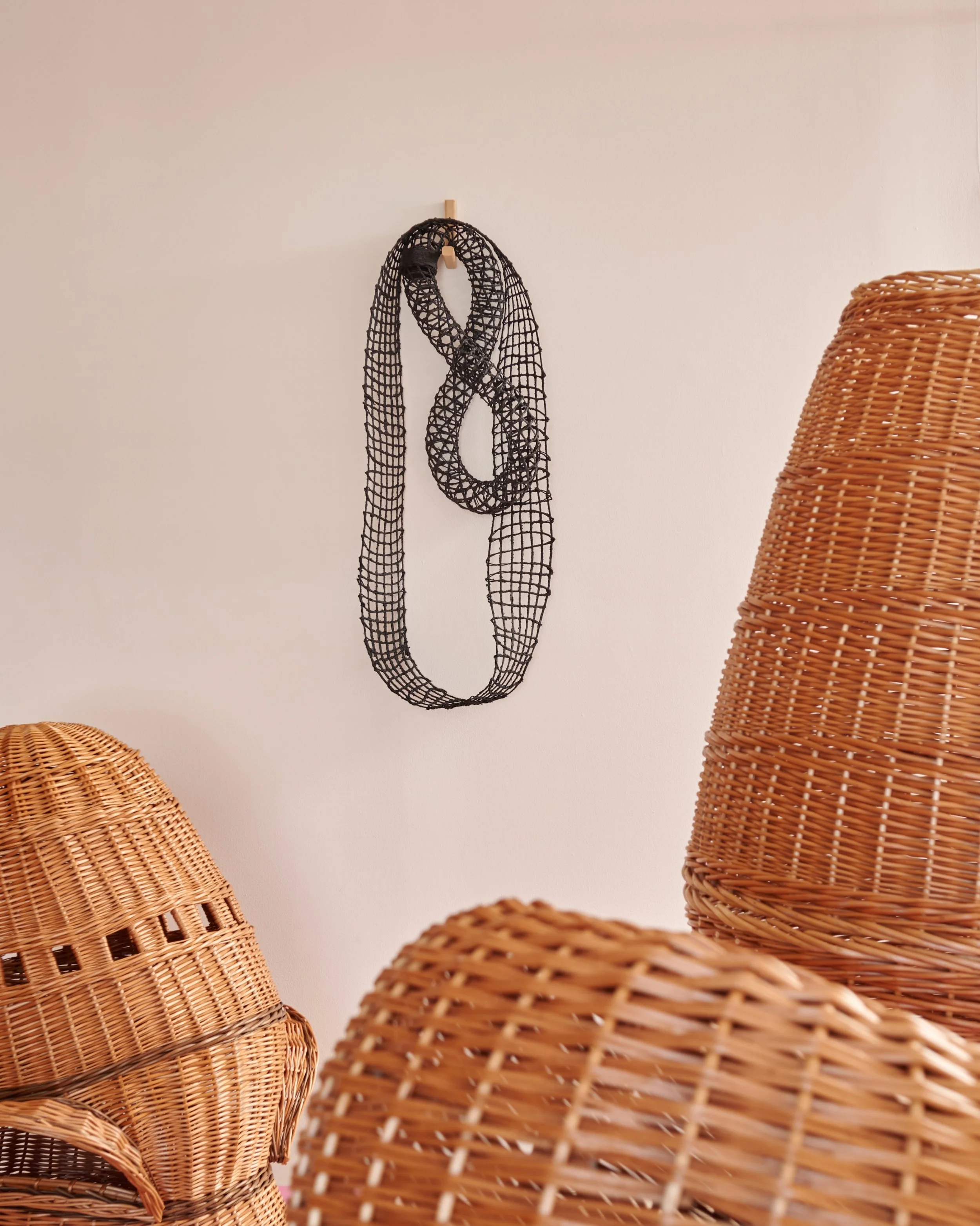
Installation view
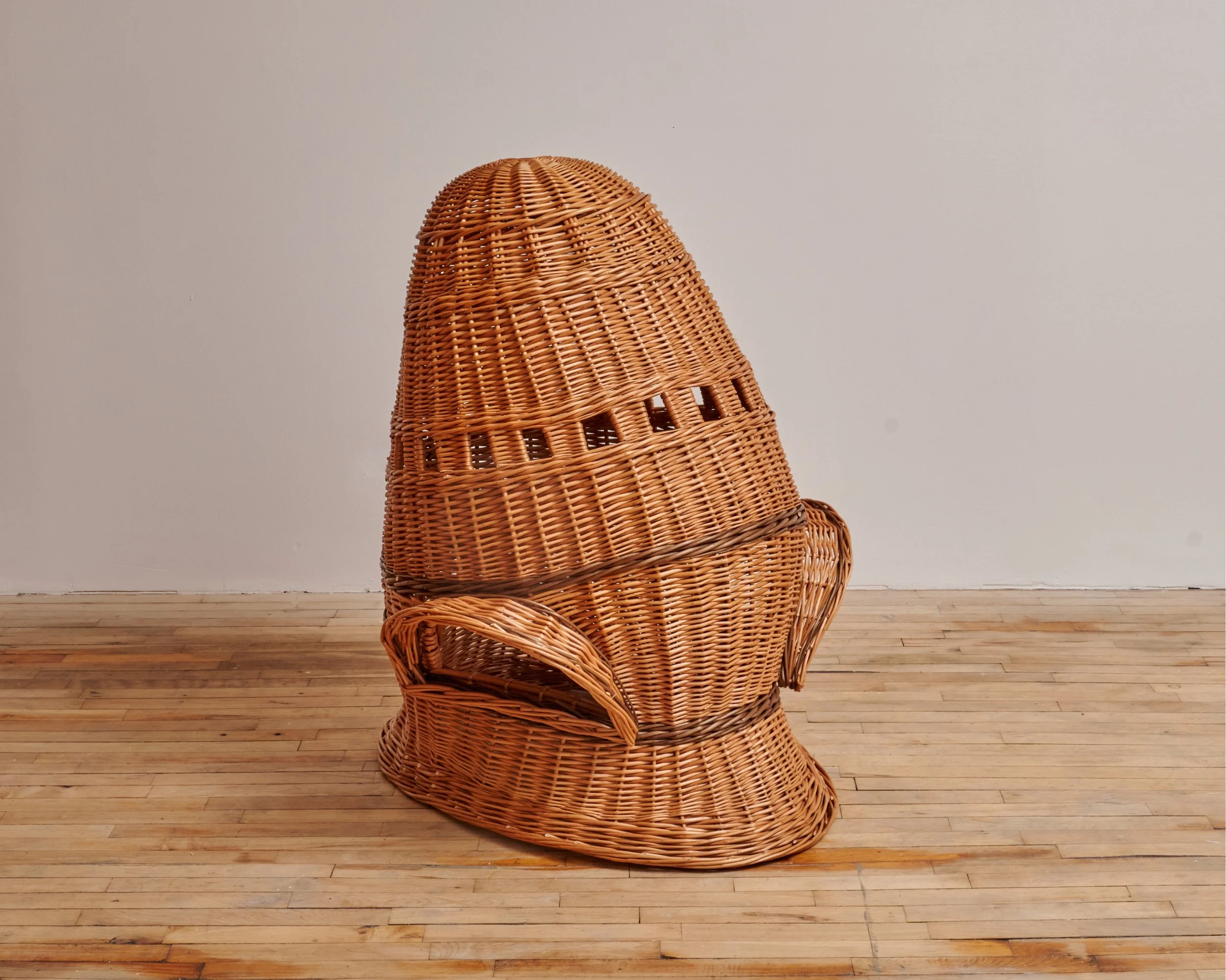
Lewis Prosser Vogum Gurtlin, 2025
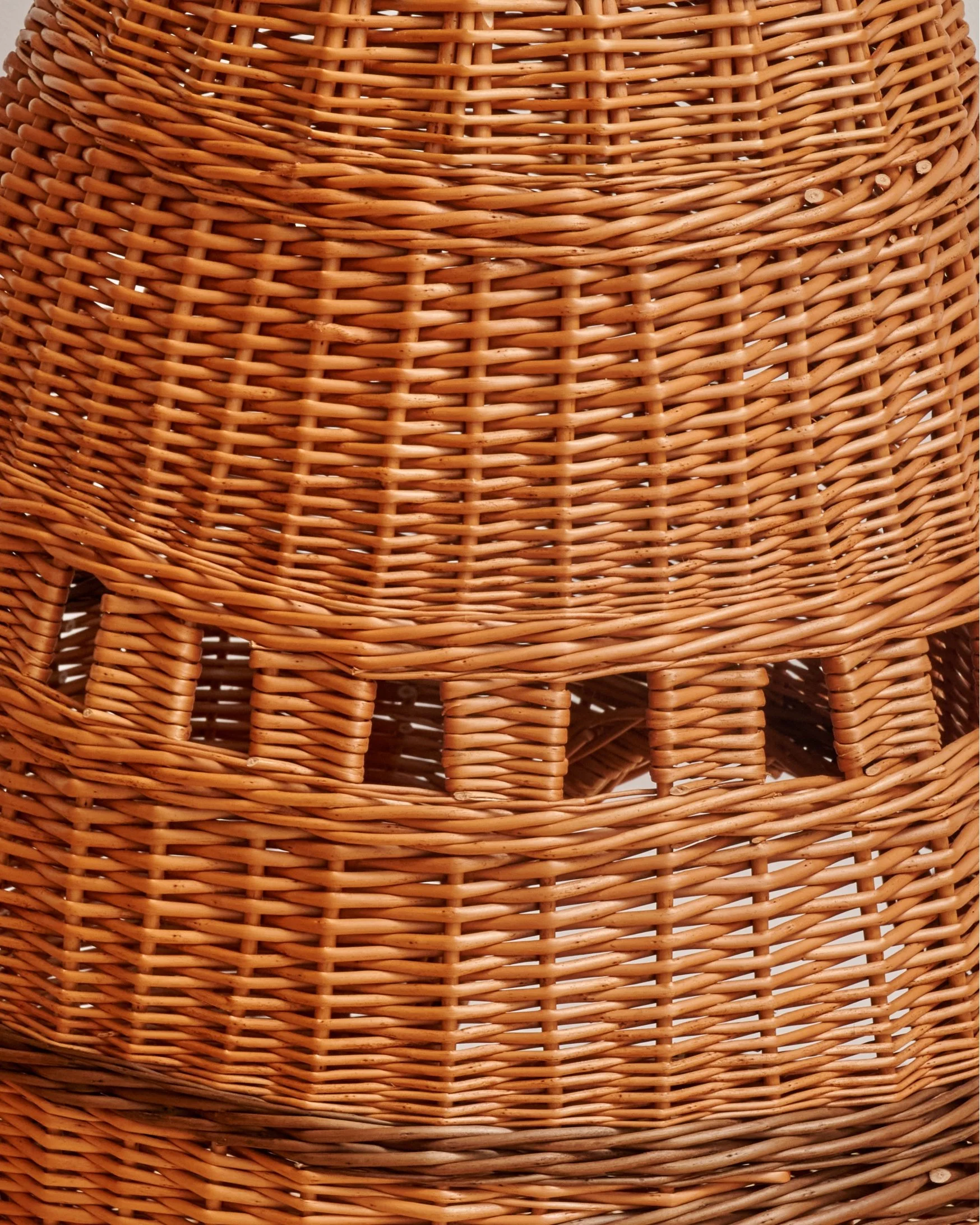
Detail Vogum Gurtlin, 2025
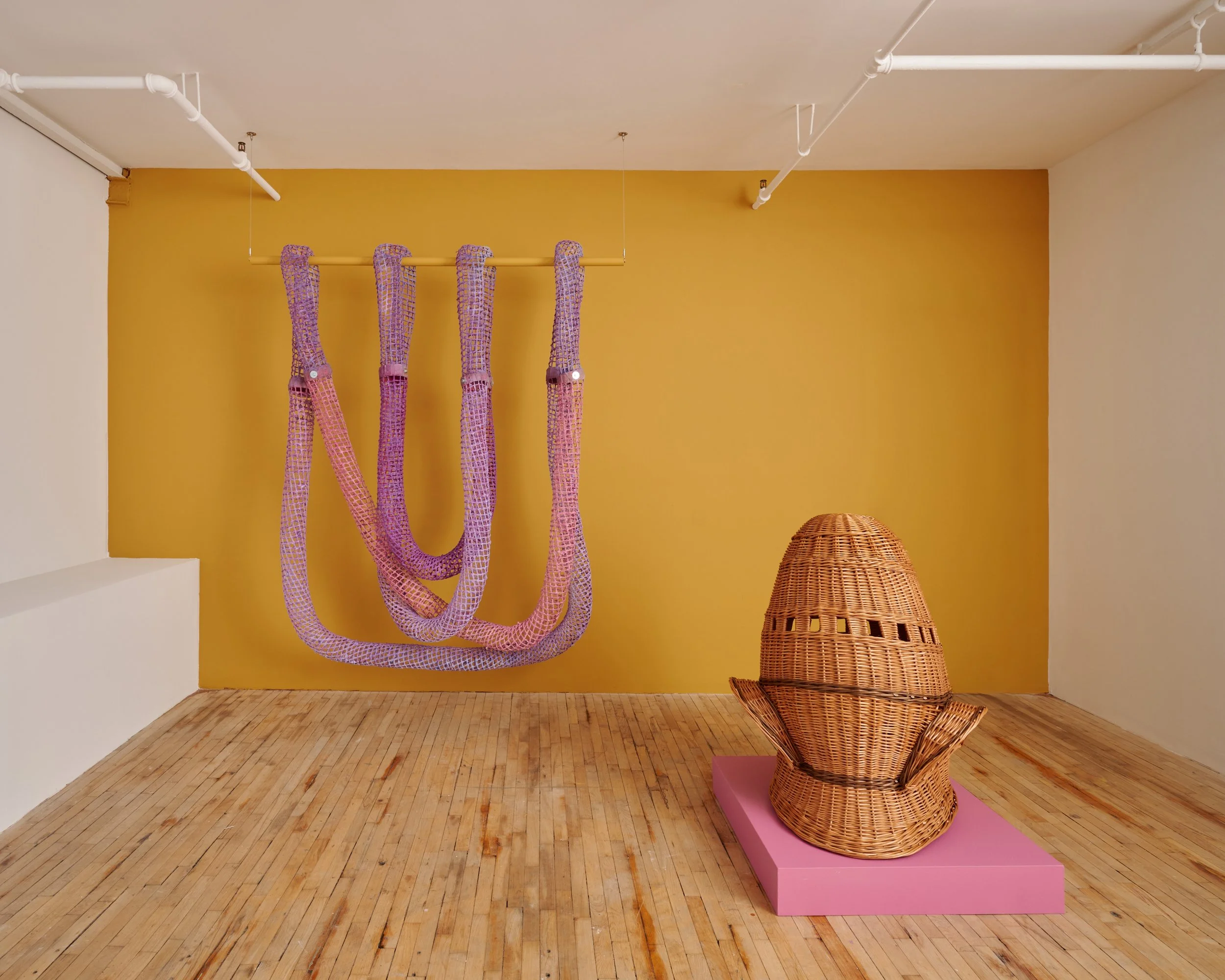
Installation view
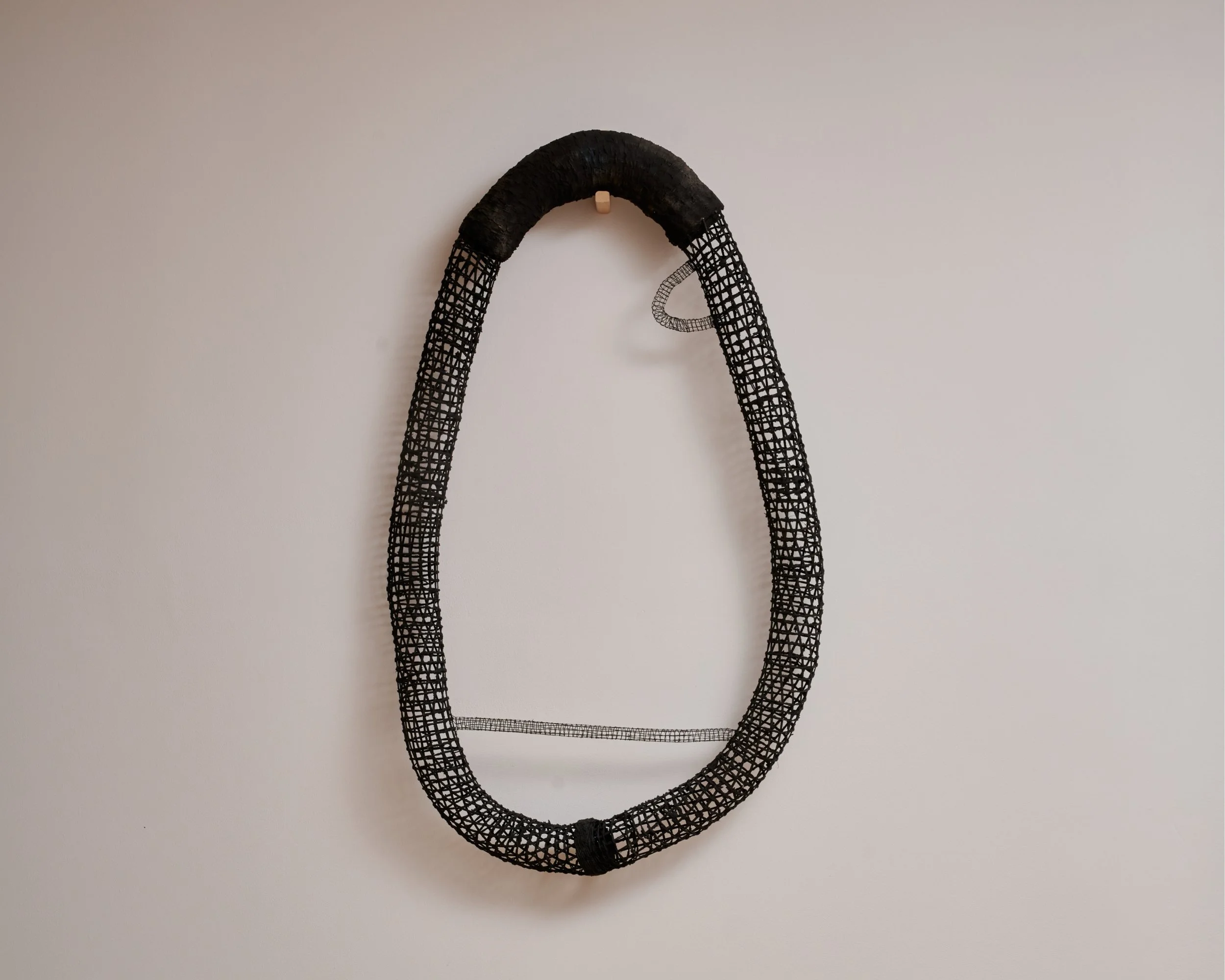
Sarita Westrup Virginal Loop, 2023
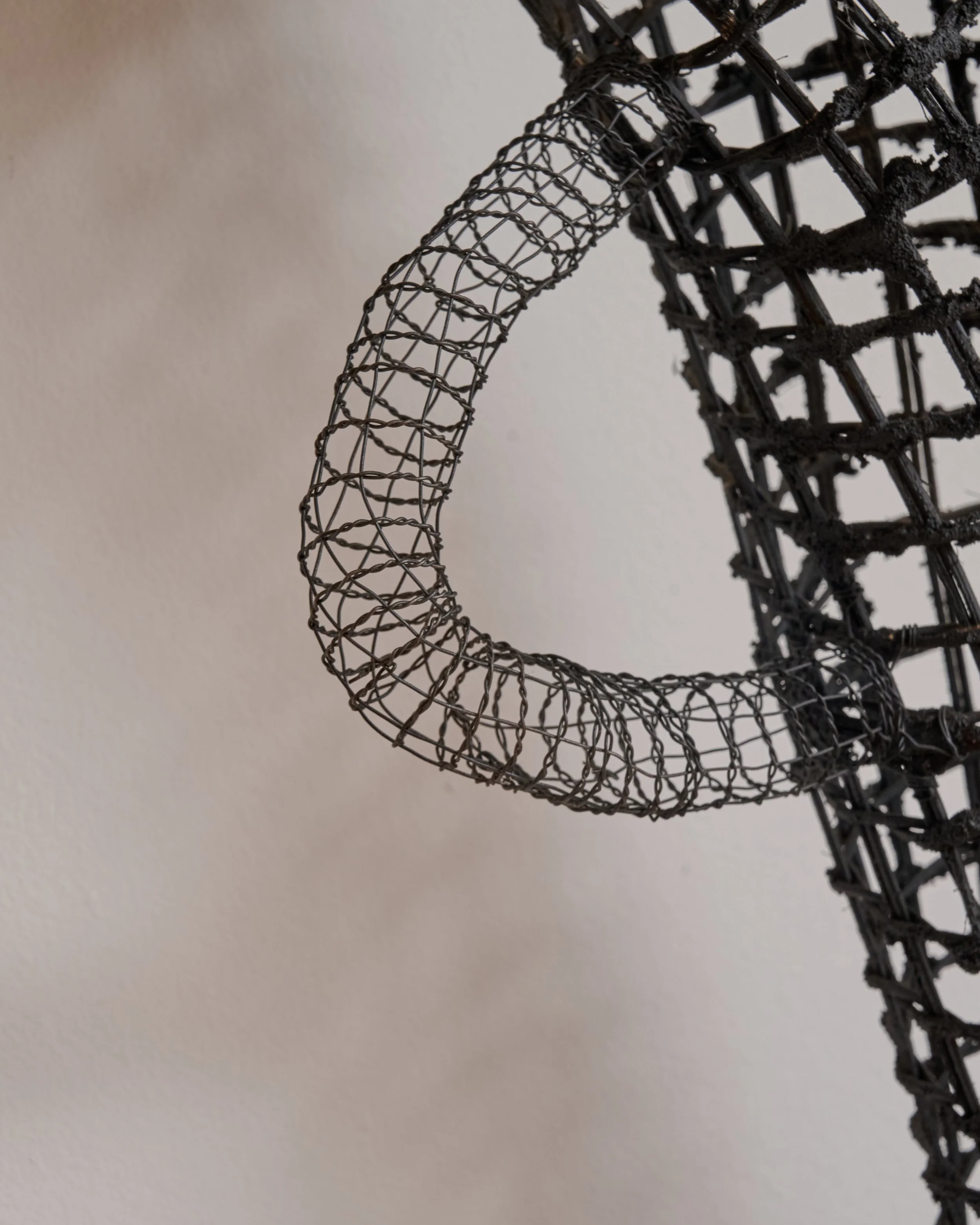
Detail Virginal Loop, 2023
About Lewis Prosser
Lewis Prosser is an absurdist basketmaker based in Wales, UK. Working through heritage craft techniques and live performance, he explores the intersections of regional identity, ritual, and material culture. His practice reimagines basketry as a vehicle for storytelling and cultural exchange—linking people, place, and ceremony through speculative and often irrational forms.
Blending meticulous craftsmanship with improvisation and humor, Prosser treats making as both a social and performative act, creating shared spaces where craft becomes alive, shifting, and co-created. He has exhibited across the UK, including Mostyn Gallery, Mission Gallery, V&A Dundee, and Bluecoat, and has presented major public projects such as Making Merrie and Carreg Ateb: Vision or Dream for the National Gallery’s Bicentenary. Prosser studied at the Glasgow School of Art and currently serves as Curator of The Turner House Gallery in Penarth. Learn more.
About Sarita Westrup
Sarita Westrup is an artist and contemporary basketmaker whose sculptural works draw on the material languages of fiber, movement, and containment to explore ideas of border, belonging, and transformation. Originally from the Rio Grande Valley of South Texas, Westrup reinterprets traditional weaving and dyeing techniques through a lens of bi-cultural identity, translating the visual rhythms of her home into forms that feel both architectural and intimate.
Working across basketry, sculpture, and installation, her practice bridges inherited craft traditions with experimental processes—binding together natural and synthetic materials to evoke the permeability between land, body, and culture. Westrup has exhibited nationally at institutions including El Museo del Barrio, the Penland Gallery, and the Chautauqua Institution. She has presented solo exhibitions at Erin Cluley Gallery, Cluley Projects, and Arts Fort Worth. Her honors include grants from the Center for Craft, Nasher Sculpture Center, Nest, and the American Craft Council, and she recently completed a one-year Artist-in-Residence at the Penland School of Craft in North Carolina. Learn more.
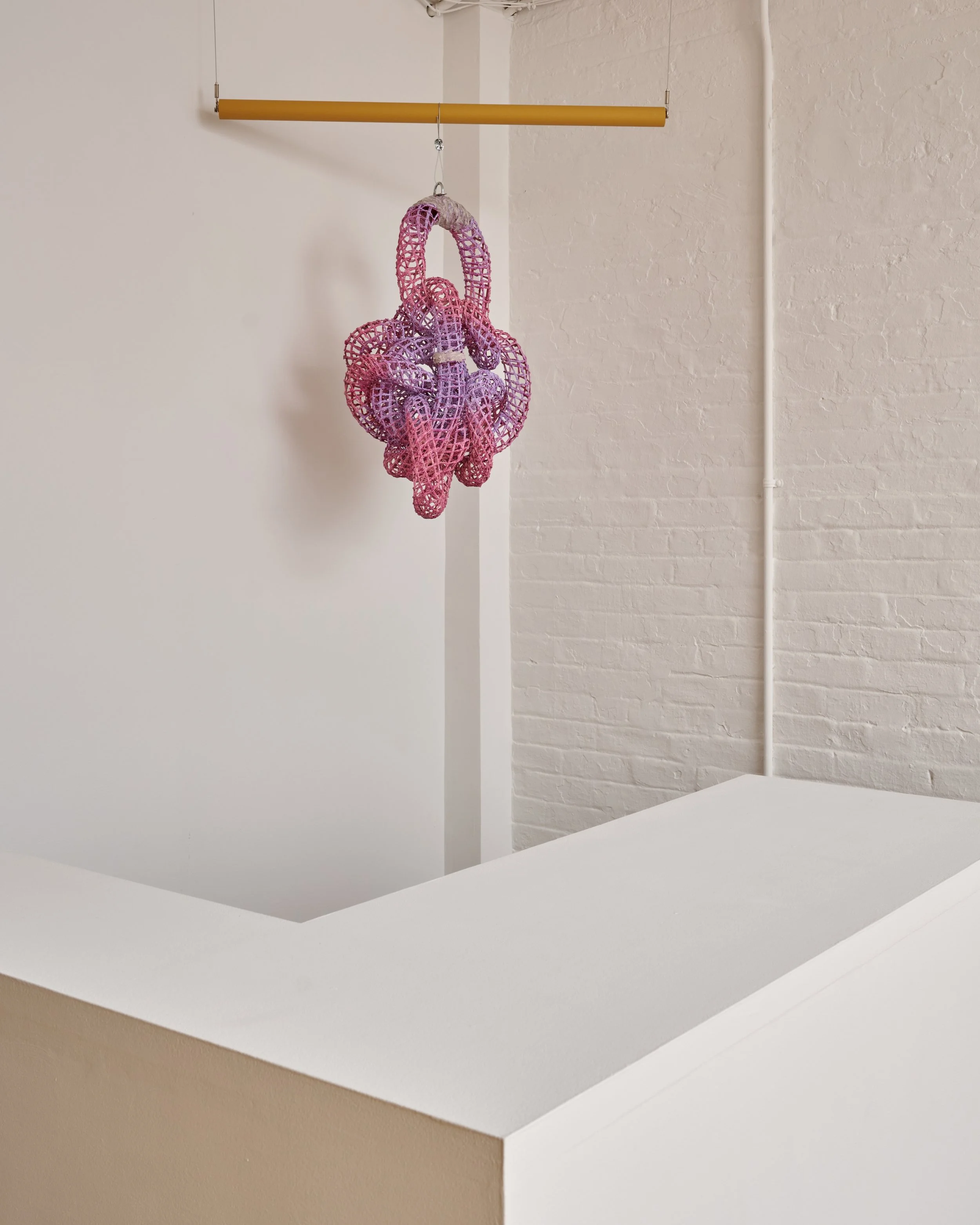
Installation view